
Wound Debridement and Dressing

Effective treatment to remove unhealthy tissue and promote faster, healthier wound healing

Wound debridement and dressing is a safe and highly effective procedure used to treat slow-healing, infected, or chronic wounds. It involves removing dead or damaged tissue and applying specialist dressings to create the optimal environment for healing. 

This treatment helps reduce infection risk, improve comfort, and support the body’s natural repair process—especially in wounds that are not healing as expected due to injury, surgery, diabetes, or circulation issues. 
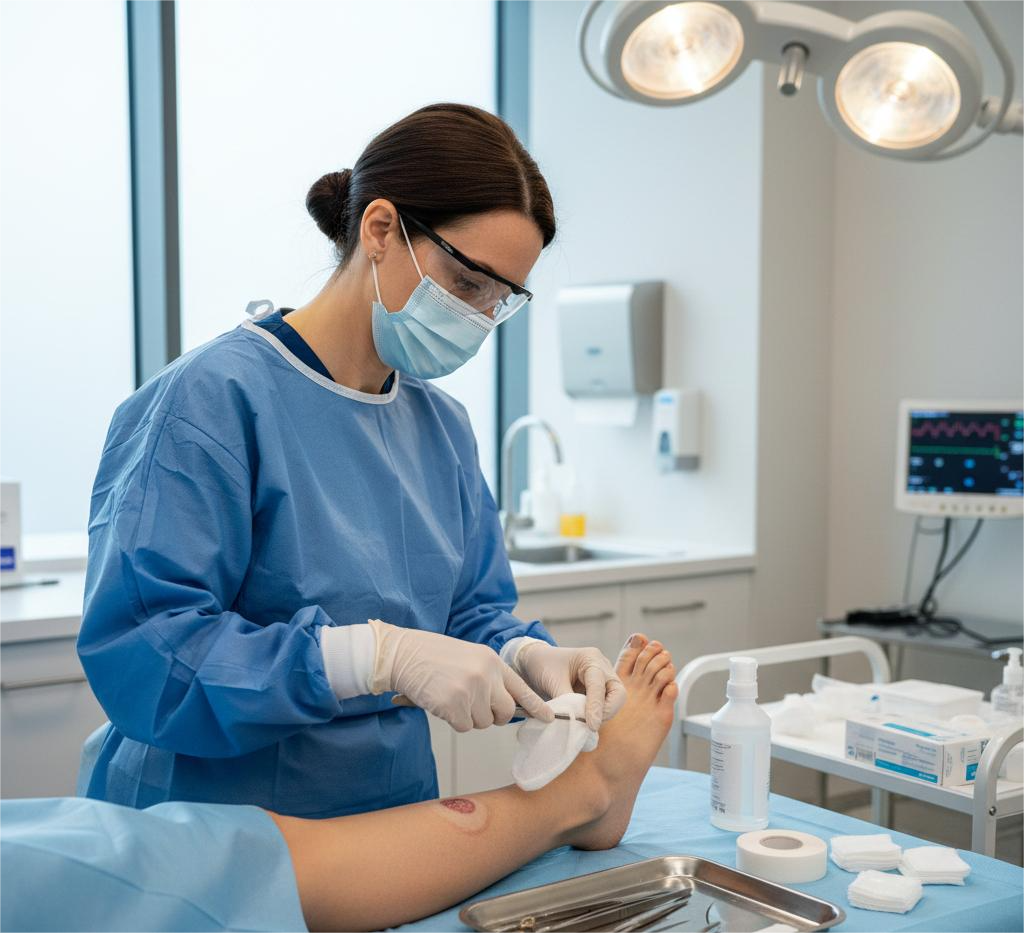
wound debridement and dressing

Trusted 5K Medical
Professionals

Why Consider Wound Debridement and Dressing

Wounds that do not heal properly often contain unhealthy or infected tissue that slows recovery. You may benefit from wound debridement if you have: 

  • Chronic or non-healing wounds 
  • Diabetic foot ulcers 
  • Pressure sores (bed sores) 
  • Post-surgical wounds that are slow to close 
  • Infected wounds with slough or debris 
  • Traumatic or injury-related wounds

Common symptoms include: 

  • Wound not improving over time 
  • Yellow, black, or dead tissue present 
  • Unpleasant odour or discharge 
  • Redness, swelling, or signs of infection 
  • Pain or tenderness around the wound

Early treatment helps prevent complications and supports faster recovery. 
Key Benefits 

Specialist minor surgery

What to Expect 

Before the procedure 

  • The wound is carefully assessed and cleaned 
  • A suitable debridement method is selected 
  • Local anaesthetic may be used if needed for comfort 

During the procedure 

  • Unhealthy tissue is gently removed using sterile techniques (such as sharp, mechanical, or chemical debridement depending on the wound) 
  • The wound bed is cleaned and prepared for healing 
  • A specialist dressing is applied to protect and support recovery 
  • The procedure usually takes 20–40 minutes 

After the procedure 

  • You may notice immediate improvement in wound cleanliness 
  • Mild soreness or sensitivity can occur briefly 
  • You will be given tailored dressing and aftercare instructions 
  • Follow-up appointments may be arranged to monitor healing progress 
  • Most patients can return to normal activities straight away 

Wound Debridement and Dressing FAQs

If your wound is not healing, looks infected, or has dead tissue present (yellow, black, or sloughy areas), debridement may be recommended.
Most patients experience minimal discomfort. Local anaesthetic is used when required to ensure the procedure is well tolerated.
This depends on the wound type and level of drainage. Some dressings last several days, while others require more frequent review.
Yes. Debridement is a key part of managing diabetic foot ulcers and significantly improves healing outcomes.
This varies depending on the wound and overall health, but many patients notice improvement within days to weeks with regular care.

Other Suggested Surgical Procedures

Trusted Experiences Shared by Our Patients

Highlighting the Care and Confidence They Receive With Every Visit

Need help treating a slow-healing or infected wound?

Get expert wound care with safe debridement and tailored dressings to support optimal healing.