You’ve had a wart or verruca for months, maybe longer. You’ve tried the pharmacy creams. You’ve used the over-the-counter freezing kits. Nothing has worked, or the results haven’t lasted. If you’re now looking at clinical cryotherapy as the next step, here’s what you need to know: how it actually works, how many sessions to expect, and what happens to your skin afterwards.
Key Takeaways
- Clinical cryotherapy uses liquid nitrogen to freeze and destroy wart or verruca tissue. It is significantly more effective than over-the-counter home kits.
- Most warts and verrucas clear in 2 to 4 sessions. Plantar warts on the sole of the foot typically need more treatments than those on the hands.
- There is a brief stinging sensation during the procedure. A blister often forms within 24 to 48 hours, which is a normal part of healing.
- NHS cryotherapy for warts is available in some areas but access is inconsistent. Waiting times can be considerable.
- Private cryotherapy is available without a referral, usually within days.
What Is Clinical Cryotherapy and How Does It Destroy Warts?
Warts and verrucas are caused by the human papillomavirus (HPV), a common virus that infects the outer layer of skin through tiny cuts or breaks.¹ The virus causes infected skin cells to multiply rapidly, producing the rough, raised surface characteristic of a wart. On the sole of the foot, pressure from walking pushes these growths inward, which is why verrucas are often flat and can be painful to walk on.
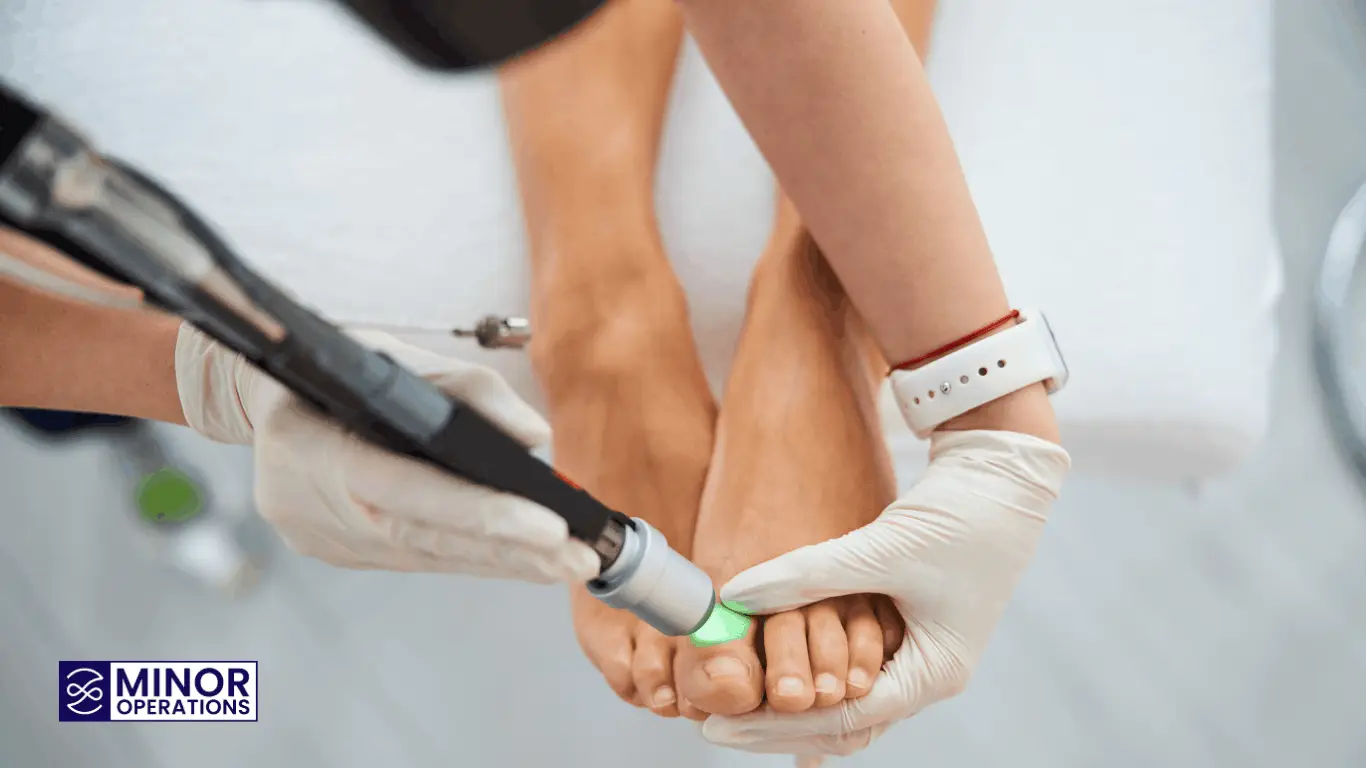
Clinical cryotherapy works by applying liquid nitrogen at a temperature of around -196 degrees Celsius directly to the infected tissue.² At this temperature, the water inside the cells freezes instantly, forming ice crystals that rupture the cell walls. The targeted tissue is destroyed. As it dies, the skin around it produces an immune response, which also helps the body recognise and fight the underlying HPV infection.
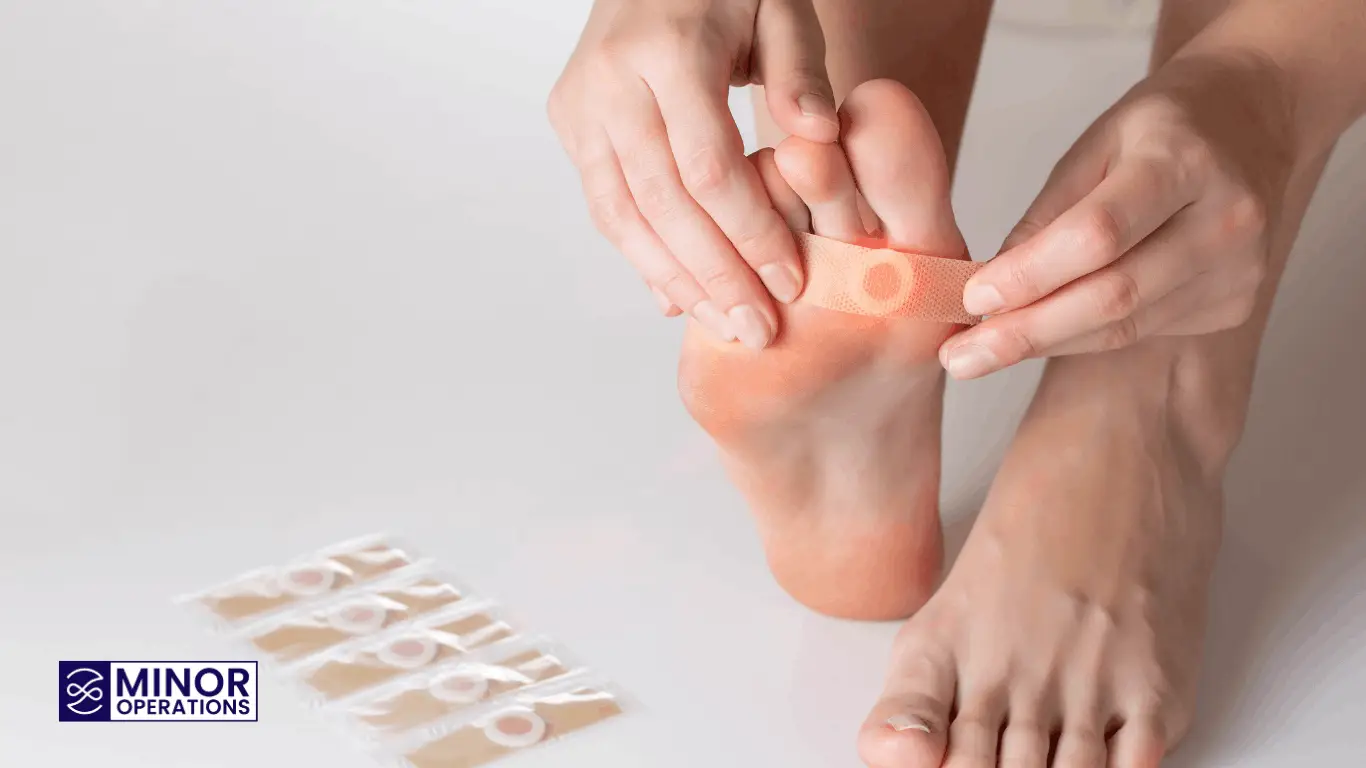
This is very different from what happens with over-the-counter home freezing kits. Home kits use dimethyl ether and propane, which reach temperatures of around -57 degrees Celsius at best. That is far warmer than liquid nitrogen and considerably less effective at destroying deeply infected tissue.³ Professional cryotherapy reaches the core of the wart rather than just its surface.
What Happens During a Cryotherapy Session for Warts or Verrucas?
The procedure is quick. A typical session takes between 5 and 15 minutes, depending on the number and size of the lesions being treated.
Before applying liquid nitrogen, the clinician may use a small blade or file to remove any dead or hardened skin from the surface of the wart. This isn’t painful and helps the freezing agent penetrate more deeply. Liquid nitrogen is then applied using a fine spray or cotton swab. Each freeze lasts between 5 and 45 seconds depending on the wart’s thickness and location.⁴ A freeze-thaw cycle may be repeated once or twice in the same session for stubborn growths.
During the freeze, expect a brief stinging or cold burning sensation. It’s uncomfortable but short-lived. Most patients describe it as manageable. No anaesthetic injection is required for most wart cryotherapy, which is one of its practical advantages.
Within 24 to 48 hours of treatment, a blister typically forms at the site. This is completely normal and part of the healing process. Do not puncture it intentionally. It will subside on its own, and the overlying skin will scab and then fall away over the following one to two weeks.
How Many Cryotherapy Sessions Will You Need for Warts or Verrucas?
This is the most common question, and the honest answer is that it varies.
Most warts on the hands respond to between 2 and 4 sessions, spaced 2 to 3 weeks apart.⁵ Plantar warts, verrucas on the sole of the foot, are typically more stubborn because the skin there is thicker and the virus sits deeper. These often need 3 to 5 sessions.
Studies show clinical cryotherapy achieves clearance in approximately 70 to 80% of cases after a complete treatment course.⁶ That’s a meaningful success rate, but it isn’t universal. Some warts are resistant to freezing alone, and a small number of patients require additional or alternative treatment approaches.
The key variable is your immune system. Cryotherapy destroys infected tissue and triggers an immune response, but how aggressively your body then fights the remaining HPV infection varies from person to person. Results are not always predictable after a single session.
NHS vs Private Cryotherapy for Warts: What Access Looks Like in 2026
The NHS does offer cryotherapy for warts and verrucas in some areas. In practice, access is inconsistent. Some GP practices have the equipment; many don’t. NHS cryotherapy, where available, is generally limited to cases where warts are painful, spreading, or have been resistant to topical treatment. Waiting times vary significantly by region.⁷
Private cryotherapy is available without a referral and can typically be accessed within days. Sessions are carried out by clinicians at CQC-registered facilities, and multiple lesions can usually be treated in a single appointment, which reduces both time and overall cost.
Minor Operations provides access to private cryotherapy for warts and verrucas through its UK-wide network of partner clinics. To find out more or submit an enquiry, visit Minor Operations.
This article is for informational purposes only and does not constitute medical advice. If you are unsure whether a skin growth is a simple skin tag or something that requires further investigation, please speak to your GP. To find out about accessing private skin tag removal through Minor Operations, visit minoroperations.co.uk.
Frequently Asked Questions
Is cryotherapy safe for treating warts and verrucas?
Yes. Clinical cryotherapy using liquid nitrogen is a well-established, evidence-based procedure that has been used in dermatological practice for decades. When performed by a qualified clinician, it is safe for most adults. It is generally not recommended for young children and may require extra care for patients with certain skin conditions or a tendency to form keloid scars.
Does cryotherapy hurt?
There is a brief stinging or burning sensation during the freeze, which most people find uncomfortable but manageable. It lasts only a few seconds. The area may feel sore for a day or two afterwards. No injection is required for most wart cryotherapy.
What should I do after cryotherapy treatment?
Keep the treated area clean and dry. A blister may form within 24 to 48 hours. Leave it alone. If it breaks on its own, cover it with a clean dressing. Avoid picking at any scabs that form. You can resume normal activities immediately, though if the verruca is on your foot, tight footwear may be uncomfortable for a day or two.
Can warts come back after cryotherapy?
The treated lesion itself will not regrow once fully destroyed. However, if the underlying HPV infection remains active, new warts may develop at the same or nearby sites. Following aftercare advice and maintaining good hand and foot hygiene helps reduce this risk.
Why didn’t the chemist’s freezing kit work on my verruca?
Home freezing kits use dimethyl ether and propane, which only reach approximately -57 degrees Celsius. That is far less cold than the liquid nitrogen used clinically at -196 degrees Celsius. Home kits can be effective for very superficial lesions, but for warts or verrucas with deeper roots, they often fail to destroy the infected tissue fully. Clinical cryotherapy penetrates more deeply and is considerably more reliable for persistent cases.
Can cryotherapy treat multiple warts in one session?
Yes. A clinician can treat multiple warts or verrucas in a single appointment. The total session time increases with the number of lesions, but treating several at once is both practical and cost-effective.
Is cryotherapy available on the NHS for warts?
In some areas, yes. However, access varies significantly depending on your local NHS provider, and waiting times can be considerable. Many people opt for private cryotherapy because it is quicker to access and does not require a GP referral.
References
[1] Kent Family Medical. (2025) Our guide to cryotherapy to treat warts and verrucae. Available at: https://www.kentfamilymedical.co.uk/how-do-you-get-rid-of-a-wart-or-verruca/ [Accessed: 23 April 2026].
[2] Oxona Health. (2025) Private wart and verruca removal. Available at: https://oxonahealth.co.uk/warts-and-verrucas-removal-oxford/ [Accessed: 23 April 2026].
[3] London Wart Removal Clinic. (2025) Cryotherapy wart removal: liquid nitrogen science explained. Available at: https://londonwartremoval.org/cryotherapy-wart-removal-liquid-nitrogen-science-explained/ [Accessed: 23 April 2026].
[4] Wart Removal Cryotherapy Barnet / LA Lipo. (2026) Cryotherapy FAQ. Available at: https://barnet.la-lipo.co.uk/wart-removal-through-cryotherapy/ [Accessed: 23 April 2026].
[5] London Wart Removal Clinic. (2025) How many sessions does cryotherapy require? Available at: https://londonwartremoval.org [Accessed: 23 April 2026].
[6] London Wart Removal Clinic. (2025) Success rates of clinical cryotherapy for warts. Available at: https://londonwartremoval.org/cryotherapy-wart-removal-liquid-nitrogen-science-explained/ [Accessed: 23 April 2026].
[7] West Hampstead Medical Centre / NHS. (2025) Cryotherapy and verrucas: NHS policy guidance. Available at: https://www.westhampsteadmedicalcentre.com/self-help-cryotherapy-verrucas [Accessed: 23 April 2026].