Most moles are completely harmless and will never cause you any trouble. But if you’ve spotted one that looks different from the others, has changed recently, or simply makes you uncomfortable, it’s natural to wonder whether it needs to come off. Knowing what to look for, and understanding your options in the UK, can make that decision a lot less stressful.
Key Takeaways
- The ABCDE rule is the most widely used tool for identifying moles that may need medical attention.
- The NHS will remove a mole if there is clinical concern about skin cancer. It does not fund removal for cosmetic reasons.
- If your GP has confirmed a mole is benign but you still want it removed, private mole removal is your most accessible route.
- You do not need a GP referral for private mole removal, but getting a GP’s assessment before booking is strongly advisable.
- Minor Operations connects patients to CQC-registered clinics for private mole removal across the UK.
When Should a Mole Be Checked by a Doctor?
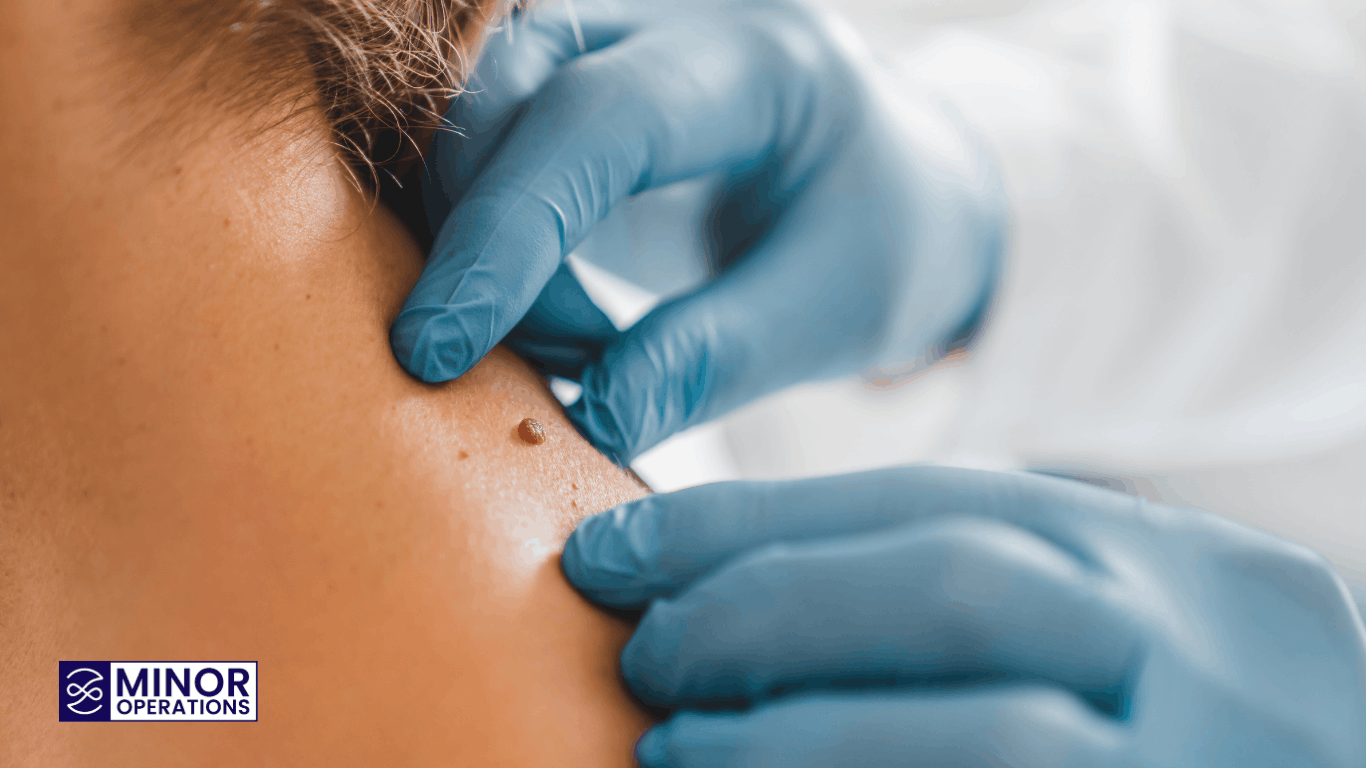
Most people have between 10 and 40 moles on their body, and the vast majority are completely stable throughout life.¹ The problem arises when a mole starts to change, or when a new one appears and behaves differently from the others.
The warning signs doctors use are best remembered using the ABCDE rule, developed by dermatologists and used by the British Association of Dermatologists to identify features of melanoma, the most serious form of skin cancer:²
A is for Asymmetry. One half of the mole does not match the other. B is for Border. The edge is irregular, ragged, or blurred rather than smooth. C is for Colour. Multiple shades within a single mole, including brown, black, red, white, or blue. D is for Diameter. Larger than 6mm across, roughly the size of a pencil eraser. E is for Evolving. It has changed in size, shape, colour, or texture over recent weeks or months.
If a mole ticks any of these boxes, see your GP. Don’t delay and don’t book cosmetic removal. A mole that might be cancerous needs proper clinical assessment before anything else.
Outside of the ABCDE signs, also watch for moles that bleed without injury, become itchy, or feel raised and firm when they previously weren’t. These aren’t automatic causes for alarm, but they are reasons to get checked.
When Will the NHS Remove a Mole in the UK?
The NHS will remove a mole when there is clinical reason to do so. This includes moles suspected of being cancerous or pre-cancerous, moles required for biopsy and further diagnosis, and moles causing significant physical symptoms.
If your GP is concerned, you may be referred urgently through the two-week wait pathway for suspected cancer. In that context, the NHS moves quickly.
Where the NHS draws the line is cosmetic removal. If your GP examines a mole, confirms it is benign, and it isn’t causing functional problems, you won’t be referred for removal on the NHS.³ Many patients find themselves in this position. They’ve been reassured the mole is harmless, but they still want it gone because of where it is, how it looks, or how it catches on clothing.
That’s where private mole removal comes in.
What Private Mole Removal in the UK Involves
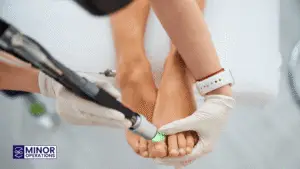
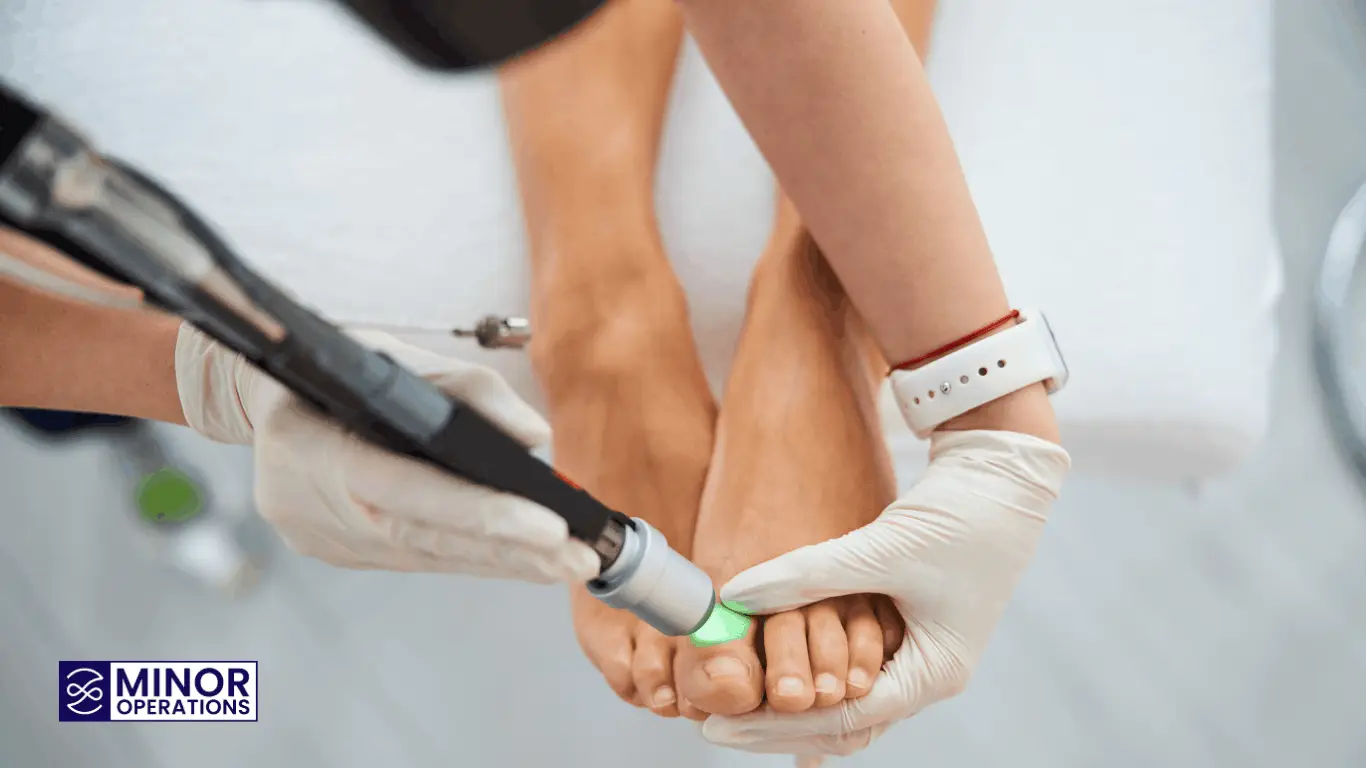
Private mole removal is a minor surgical procedure carried out under local anaesthetic. Once the area is numb, the clinician removes the mole using one of two techniques.
Surgical excision involves cutting around the mole, removing a small border of healthy skin, and closing the wound with stitches. The removed tissue is typically sent for histological analysis, examination under a microscope, to confirm it is benign. Shave excision is used for raised moles that sit above the skin surface. The mole is shaved flat and the base is cauterised. Stitches are not usually required.
Most procedures take between 20 and 45 minutes. You go home the same day. If stitches are used, they are typically removed 7 to 14 days later, depending on the location.⁴
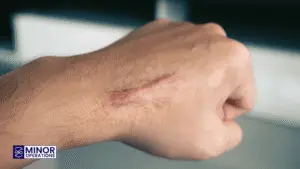
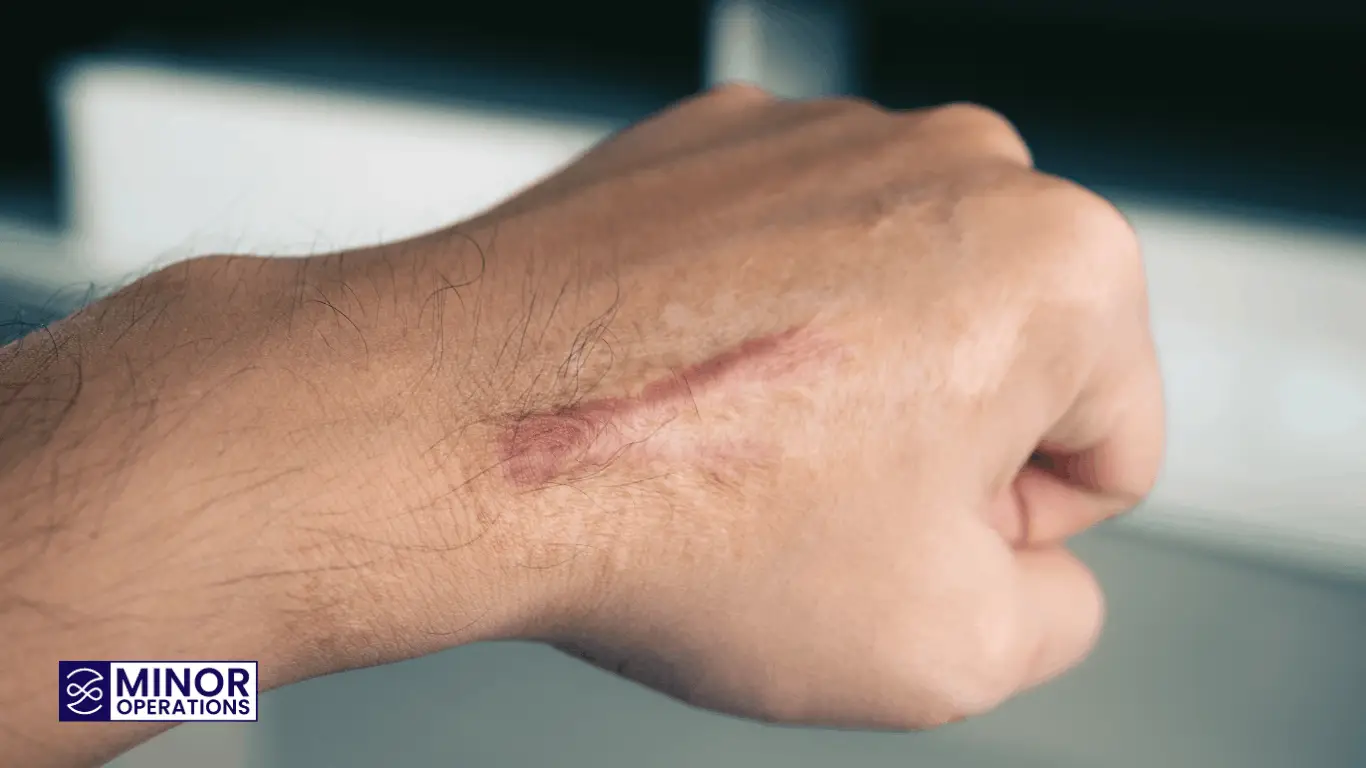
There will be a scar. Its size and visibility depend on the technique used, the mole’s location, and your skin type. An experienced clinician will aim to minimise it, and scars typically fade significantly over six to twelve months. Private mole removal in the UK typically ranges from £275 to £600 per mole, with histology included in many packages.⁵
Should You See a GP Before Booking Private Mole Removal?
Yes. This is important. Private removal can be arranged without a GP referral, but if you haven’t had the mole assessed by a doctor, you should do so before booking any cosmetic procedure. A GP or qualified clinician can confirm the mole is benign and not one that requires urgent NHS attention.
Proceeding with cosmetic removal of an unassessed mole risks obscuring something that needed proper investigation, however unlikely that may be. Once you have that reassurance, private removal is a quick, safe, and reliable option.
You can explore private mole removal through Minor Operations and submit your enquiry.
This article is for informational purposes only and does not constitute medical advice. If you are unsure whether a skin growth is a simple skin tag or something that requires further investigation, please speak to your GP. To find out about accessing private skin tag removal through Minor Operations, visit minoroperations.co.uk.
Frequently Asked Questions
How often should I check my moles?
A self-check every one to two months is a reasonable habit. Pay attention to any moles that have changed since you last looked. Photographs taken from the same angle and distance can be useful for tracking changes over time.
Can a benign mole become cancerous over time?
Most benign moles remain stable throughout life. A small minority can develop atypical features over many years. This is why ongoing monitoring matters. Even moles your GP has previously assessed as harmless are worth watching. If anything changes, get it checked again.
Will a private clinic send the removed mole for testing?
Reputable private clinics that perform surgical excision will send the removed tissue to a pathology laboratory for histological analysis. This is standard practice and confirms the lesion’s nature. You should receive your results within 7 to 14 days. Always check this is included before booking.
Is there a difference between mole removal and a skin biopsy?
A biopsy involves taking a small sample of tissue for diagnostic purposes. Mole removal is a complete excision, removing the whole mole. In some cases the two overlap. A mole may be entirely removed and the tissue used as the biopsy specimen, which is common practice in private minor surgery.
Can raised moles be removed without leaving a scar?
Shave excision of raised moles leaves a smaller, flatter mark than surgical excision. However, any procedure that removes tissue from the skin will leave some trace. The appearance fades with time. Clinicians performing removal on visible areas such as the face will take particular care to minimise scarring.
What happens if my mole turns out not to be benign after private removal?
If histology results raise any concern after private removal, you will be referred on for further assessment through the NHS. Reputable private clinics will make this process clear from the outset.
What is the recovery time after private mole removal?
Most people return to desk-based work the following day. If stitches are in a difficult location such as a joint, the face, or the hands, your clinician may recommend keeping the area still or protected for a few days. Stitches are usually removed within one to two weeks.
References
[1] NHS. (2023) Moles. Available at: https://www.nhs.uk/conditions/moles/ [Accessed: 23 April 2026].
[2] British Association of Dermatologists / Skin Health Info. (2020) ABCDEasy: Checking your skin for melanoma. Available at: https://www.skinhealthinfo.org.uk [Accessed: 23 April 2026].
[3] Centre for Surgery. (2025) Can I get mole removal on the NHS? Available at: https://centreforsurgery.com/can-i-get-mole-removal-on-the-nhs/ [Accessed: 23 April 2026].
[4] Midland Skin. (2025) Lipoma and skin lesion removal: surgical guidance. Available at: https://www.midlandskin.co.uk [Accessed: 23 April 2026].
[5] All Health and Care UK. (2026) Mole removal in the UK: when it’s needed, treatment options, costs and recovery. Available at: https://allhealthandcare.co.uk/resources/mole-removal-in-the-uk [Accessed: 23 April 2026].