Hard skin on your feet is common
Key Takeaways
- Corns are small, concentrated areas of hardened skin that often cause pain, particularly when pressed.
- Calluses are broader, flatter patches of thickened skin that are usually painless.
- Both are caused by repeated friction or pressure, often from footwear or foot mechanics.
- The NHS does not typically treat corns or calluses unless there is a medical risk, such as in people with diabetes.
- Minor Operations connects patients to CQC-registered clinics for private corn and callus removal across the UK.
Corn vs Callus: How to Tell the Difference
Although they may look similar at first glance and both are caused by repeated pressure or friction, corns and calluses have distinct characteristics. They behave differently, feel different, and are treated in slightly different ways. Understanding what you’re dealing with can help you choose the right approach and avoid making it worse.
A corn is a small, round area of thickened skin with a hard centre. It often develops on pressure points such as the tops or sides of toes, or on the sole of the foot. Corns tend to be painful, particularly when direct pressure is applied, because the hardened core presses into deeper layers of skin. [1]
The most reliable way to tell them apart is through foot corn vs callus pain. Press directly on the area. A corn will typically hurt; a callus usually won’t.
A callus is broader and more diffuse area of thickened skin. It commonly forms on the ball of the foot, heel, or palm of the hand. Calluses are usually not painful and develop as a protective response to repeated friction over time. [2]
If the area hurts when you press it directly, it is more likely to be a corn. If it feels rough but not tender, it is more likely to be a callus.
Corn vs Callus: Common Causes
Both conditions are caused by repeated pressure or friction, but the underlying triggers can vary.
Common causes include:
- Ill-fitting shoes that rub or squeeze certain areas of the foot.
- High heels, which increase pressure on the ball of the foot.
- Walking or standing for long periods.
- Foot deformities such as bunions or hammertoes.
- Not wearing socks, which increases friction against footwear.
Over time, the skin thickens to protect itself. In some cases, this protective response becomes excessive, leading to discomfort or pain.
When Should You See a Specialist?
Most corns and calluses are not dangerous, but they can become painful or interfere with walking if left untreated.
You should consider seeing a GP or podiatrist if:
- The area is persistently painful.
- It keeps coming back despite home care.
- You are unsure whether it is a corn, callus, or something else, such as a verruca.
- You have diabetes, poor circulation, or nerve problems affecting your feet.
In these cases, professional assessment is important. Self-treatment, including cutting or using medicated pads incorrectly, can lead to complications.
Does the NHS Treat Corns and Calluses in the UK?
The NHS does not usually provide treatment for corns or calluses if they are considered minor or cosmetic. [3]
However, treatment may be available if there is a clinical need, particularly for patients with underlying health conditions such as diabetes or vascular disease, where foot health is closely monitored.
For most otherwise healthy individuals, routine care and removal fall outside NHS provision. This is why many people choose private treatment when symptoms become uncomfortable.
Private Corn Removal in the UK: What to Expect
Treatment depends on the severity and underlying cause, but the goal is always the same: reduce pressure and remove the thickened skin safely.
Conservative (At-Home) Care
For mild cases, simple measures can help:
- Wearing properly fitted, supportive shoes.
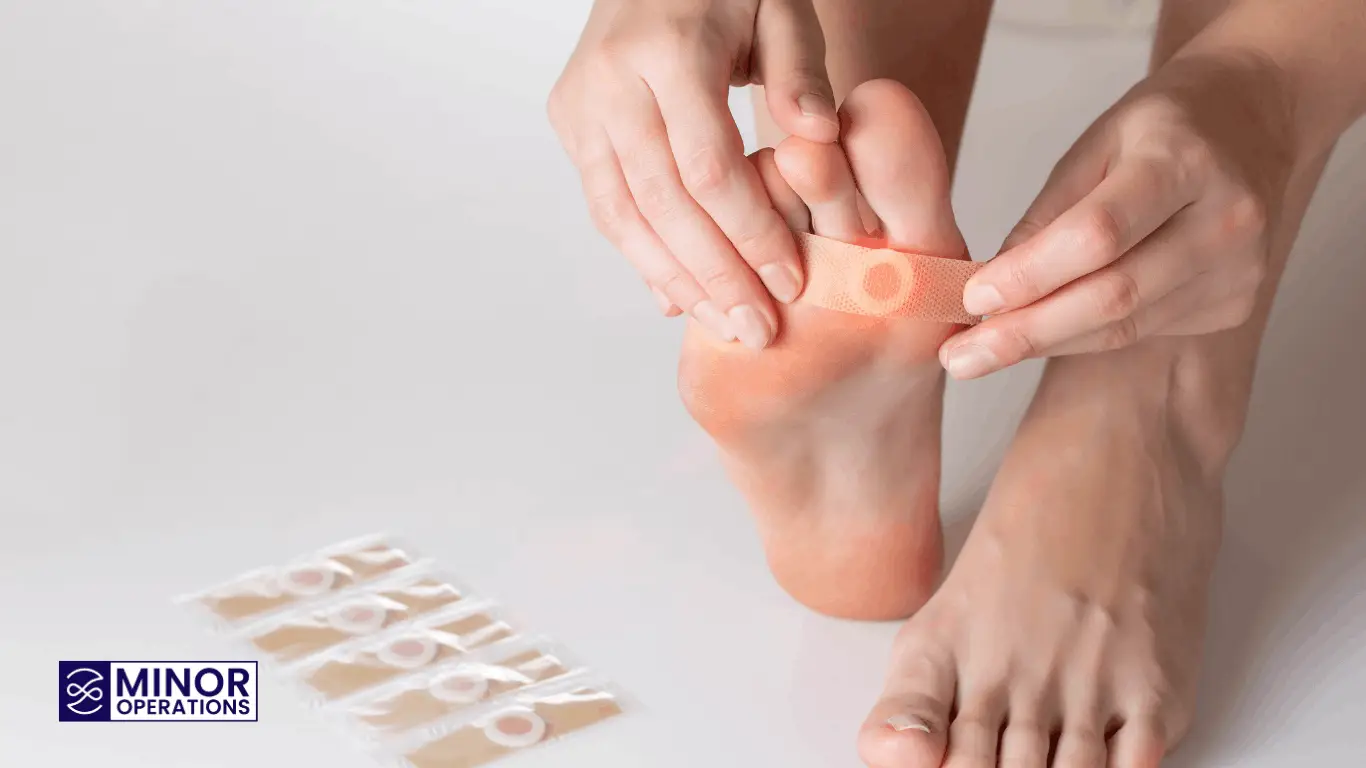
- Using cushioned pads or insoles to reduce pressure.
- Regularly moisturising to keep the skin soft.
- Gently using a pumice stone to reduce thickened skin over time.
These approaches are more effective for calluses than for corns, especially painful ones.
Professional Treatment
If the corn or callus is painful or persistent, professional treatment is often the most effective option.
A podiatrist or qualified clinician may:
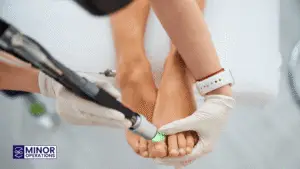
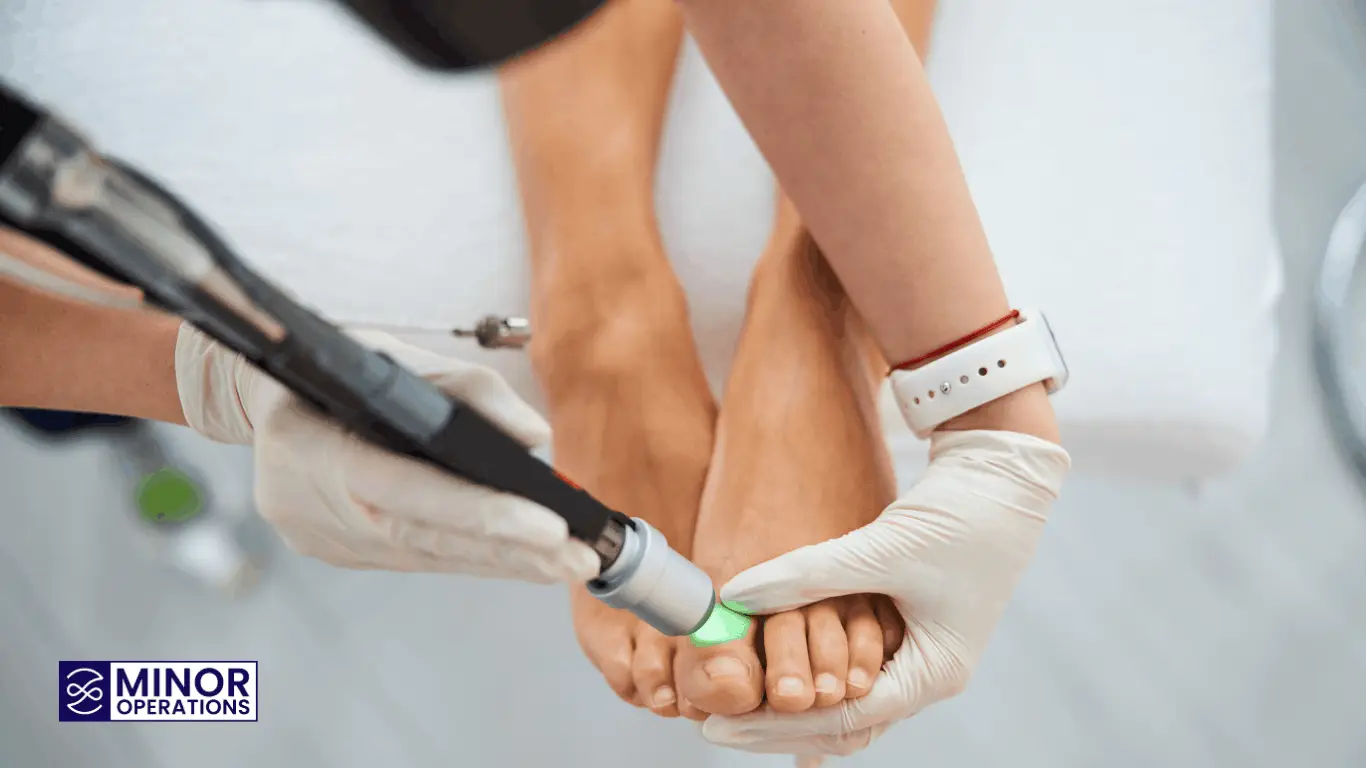
- Carefully debride (remove) the thickened skin using sterile instruments.
- Remove the central core of a corn to relieve pain.
- Assess your gait or footwear to prevent recurrence.
- Provide custom orthotics to redistribute pressure.
Treatment is usually quick and carried out in a clinic setting Many patients report significant relief after corn removal, particularly once the hardened core is debrided.. [4]
In some cases, especially where corns recur due to structural issues, minor surgical correction may be discussed.
You can explore professional corn and callus removal and submit your enquiry at Minor Operations.
This article is for informational purposes only and does not constitute medical advice. If you are unsure whether a skin growth is a simple skin tag or something that requires further investigation, please speak to your GP. To find out about accessing private skin tag removal through Minor Operations, visit minoroperations.co.uk.
Frequently Asked Questions
Can I remove a corn myself?
No. Attempting to cut or dig out a corn yourself can lead to infection, bleeding, or worsening pain. Over-the-counter treatments containing salicylic acid can also damage healthy skin if not used carefully.
It is always safer to have a proper diagnosis and treatment plan, particularly if the lesion is painful or you are unsure what it is.
How can I tell if it’s a corn or a verruca?
Verrucas (plantar warts) are caused by a viral infection and often have small black dots within them. They may also hurt when squeezed from the sides rather than pressed directly. A corn typically has a hard central core and is painful under direct pressure.
Do corns go away on their own?
Corns may improve if the source of pressure is removed, such as changing footwear. However, many persist and require treatment, especially if the underlying cause remains.
Are calluses dangerous?
Not necessarily. Calluses are the skin’s natural way of protecting itself from repeated friction. They only become a problem if they grow too thick, crack, or cause discomfort.
Is corn removal painful?
Professional removal is usually not painful. You may feel some pressure during the procedure, but relief is often immediate once the core is removed.
How long does it take to recover after treatment for corn or callus?
There is usually no downtime after conservative removal. You can walk out of the clinic the same day and resume normal activities, although footwear adjustments may be recommended.
Can corns and calluses come back after removal?
Yes. If the source of pressure or friction is not addressed, they can return. This is why footwear advice and pressure redistribution are key parts of treatment.
References
[1] NHS. (2023) Corns and calluses. Available at: https://www.nhs.uk/conditions/corns-and-calluses/ [Accessed: 29 April 2026].
[2] Royal College of Podiatry. (2025) Corns and callus: common foot problems. Available at: https://rcpod.org.uk/common-foot-problems/corns-callus [Accessed: 29 April 2026]
[3] NHS England. (2024) Evidence-based interventions: Guidance for CCGs. Available at: https://www.england.nhs.uk [Accessed: 29 April 2026].
[4] College of Podiatry. (2025) Corn and callus treatment guidance. Available at: https://www.collegeofpodiatry.org [Accessed: 29 April 2026].